

Somewhere along the way, Porsche built a GTS so perfect that the driver became optional.
The 911 is an iconic sports car. It lives up to everything a true sports car should look, feel, and sound like. As kids, many of us were drawn to its unmistakable silhouette. We daydreamed about owning one someday. And for the lucky few who made that dream real, you learned it lived up to every expectation.
What Made It So Special
It all began in the early 1960s, when Porsche set out to create a successor to the beloved 356. What emerged was a shape and a driving character that felt instantly special. The rear engine layout, the light and precise steering, and the way the chassis communicated every change in the road made the 911 a car built for people who love the act of driving. It was about connection. The 911 invited you to listen, to feel, and to become part of the machine rather than simply being its operator.
Over the years, the 911 has changed in ways that felt impossible until they arrived. The Turbo era brought racing level performance to everyday roads. The introduction of water cooling sparked debates, yet it unlocked a new chapter in engineering and pushed the flat-six further than air cooling ever could. Advancements in suspension, aerodynamics, and electronic stability helped the 911 grow into something faster, more planted, and more approachable.
One thread stayed constant; progress and purity could coexist when the goal was to serve the driver. With each evolution it still felt unmistakably 911.
The Reward Prediction Error (RPE) System
There was a time when a manual transmission wasn’t a preference; it was the language of the 911. It demanded patience, rewarded timing, and turned every drive into a conversation between the driver and the flat six behind them. That feeling mattered because our brains are wired for something called the reward prediction error system.
Simply put, we need imperfections to master while driving. That’s what makes us feel good. The chance to time a downshift perfectly, to upshift at peak torque, to choose the right gear for the gradient or the corner, to settle the car for a clean exit on a turn, all create bigger rewards in our brains. We enjoy the moments we can’t fully predict but handle well. Neuroscientists call it RPE. Drivers just call it a good corner.
Putting RPE To The Test
One year, I remember driving through the Pyrenees with friends. I was in a 718 GTS, and my friend Gary was ahead of me in a Cayman 981.


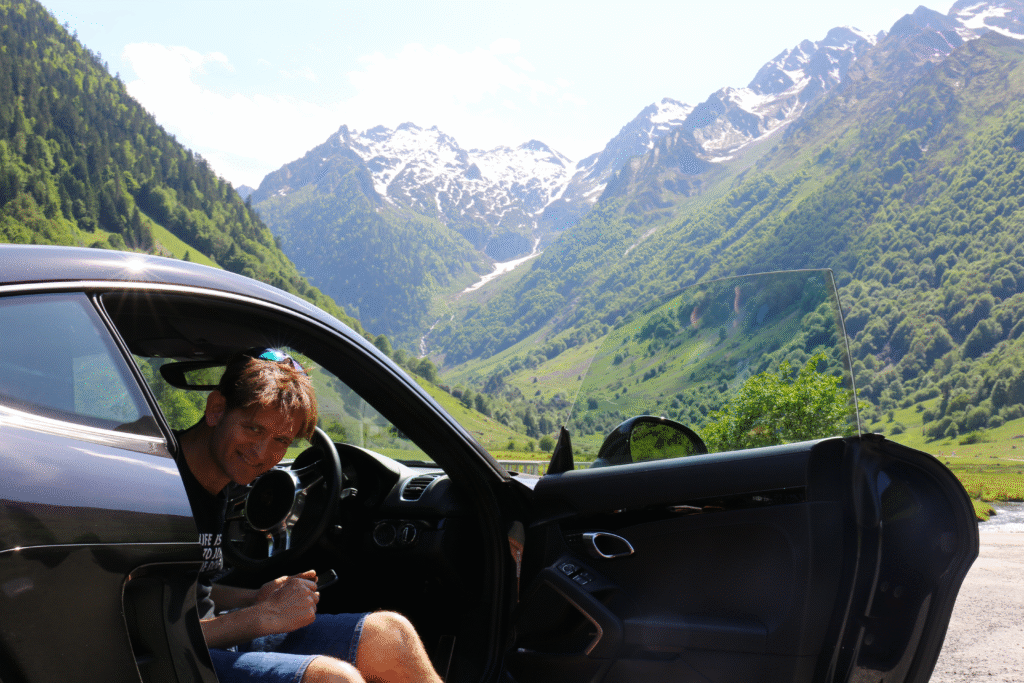
The road was flowing, the cars were alive, and we were working for every moment of the drive. When we stopped, we jumped out of the cars and literally jumped up and down with excitement. That is what these machines were built for.


The joy had come from knowing we had squeezed every ounce of performance from these cars and, the most important part, we were essential to that process. We did that. And we felt good because of it.
The Purity of The Drive
I loved my 2020 992.1 Carrera 2S. It uplevelled, in every way, those feel good moments. It was my first 911 and it had a kind of jet engine sound to it that was nothing like I’d heard before as a driver.
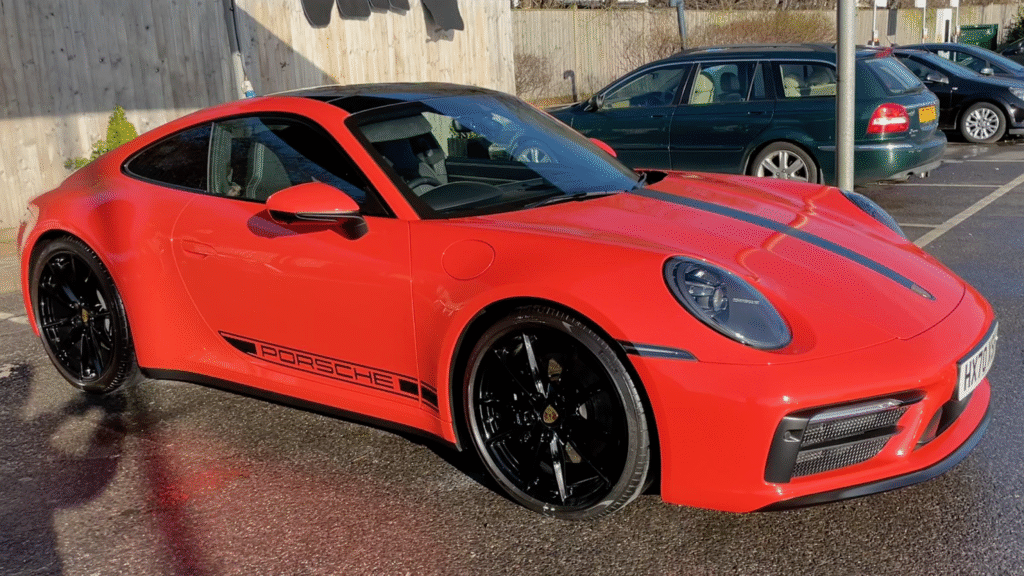
I had a favourite road, between the roundabout near the Shell garage in Staines and the M25 roundabout that enabled me to go from a standstill at the lights to motorway speed as quickly as I wanted to.
I had to feather the throttle on a long sweeping bend because too much too quickly would cause the back end to step out. I had to be patient and purposeful. I had to time things correctly, listening to the sound of the engine telling me how much more I could push balancing with what I wanted to get out of this particular gear. I would often have my sunroof open because the 911 active spoiler would go even higher to compensate for the shift in dynamics and I could actually see it in the mirror. It was a short moment of perfect symphony between the car and me. We worked together like a team. And the RPE system went into overdrive. What a way to start my journey, wherever I was headed.
My friend Rich had a 991.2 GTS, in fact, he’s had a few 911’s including the very delicious 991.1 Targa 4 GTS and I learned through his experiences, and the endless motoring journalist community, it was unmistakably the model of the 911 that did everything right.
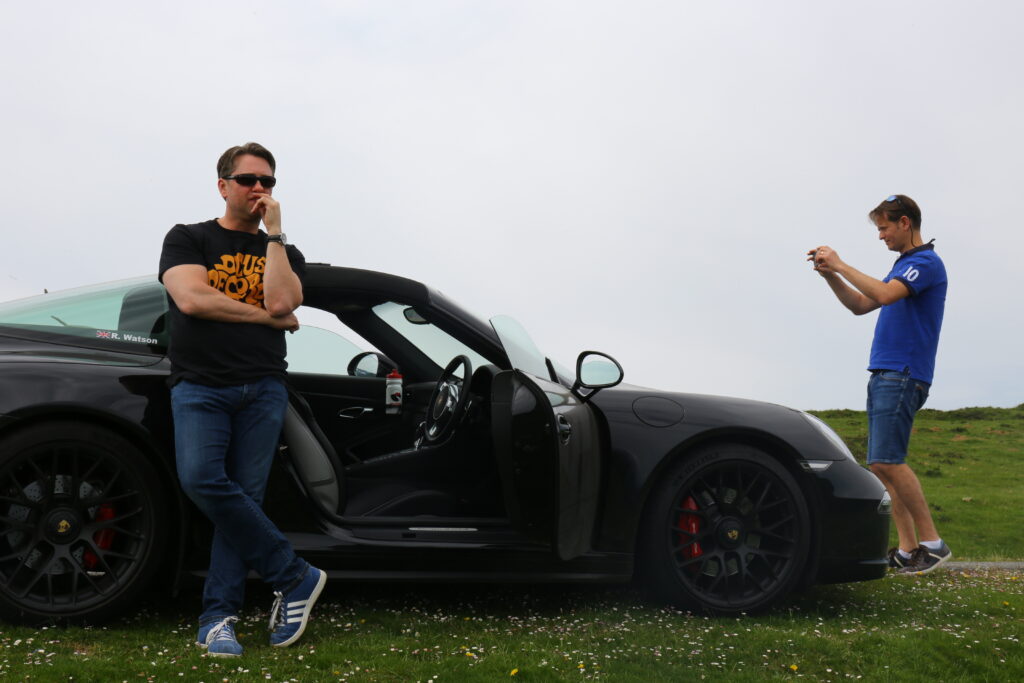
For years, it was the model that let drivers extract the very best of what made the car special. It struck a rare balance between modern capability and the kind of feedback that made your brain light up with every perfectly judged shift or corner exit. It carried more urgency than a base Carrera or even the S, more involvement than a Turbo, and just enough edge to make every drive feel like a small accomplishment.
Living The Driving Dream
Earlier this year I found myself needing to find a new weapon of choice for a driving trip with the guys, again. I wanted to really feel the drive so I walked into Porsche Portsmouth and bought a manual 718 4.0 GTS. Wow, what a car. And what a drive in France. The guys were in 981 GTS, 718 GT4 RS, 718 Spyder RS, and 718 GT4. We were set for an epic drive.
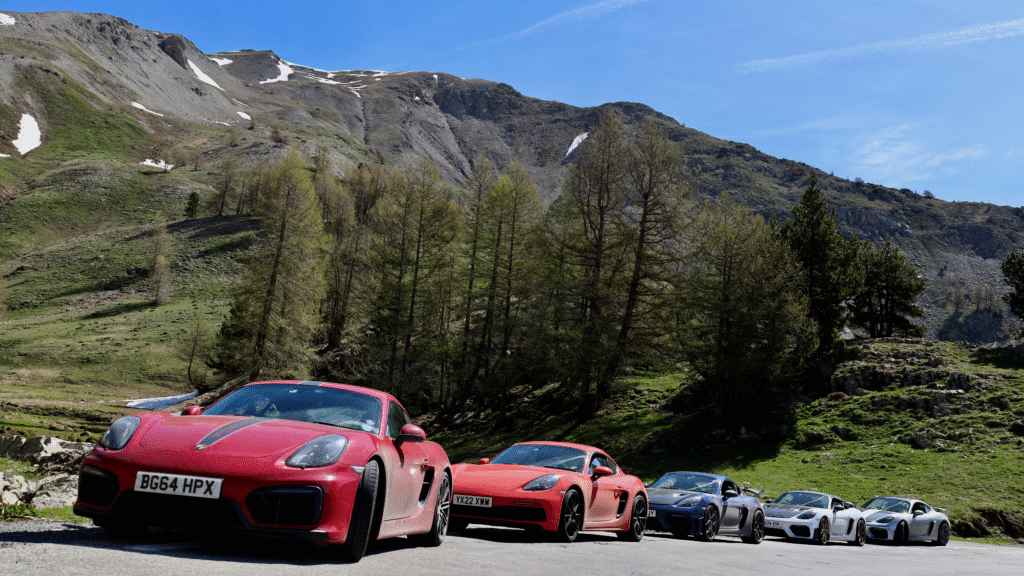
What I loved most about this trip was the opportunity to really enjoy a lot of the characteristics of that pure sports car recipe. 4.0 naturally aspirated engine, mid-engine, manual gearbox.
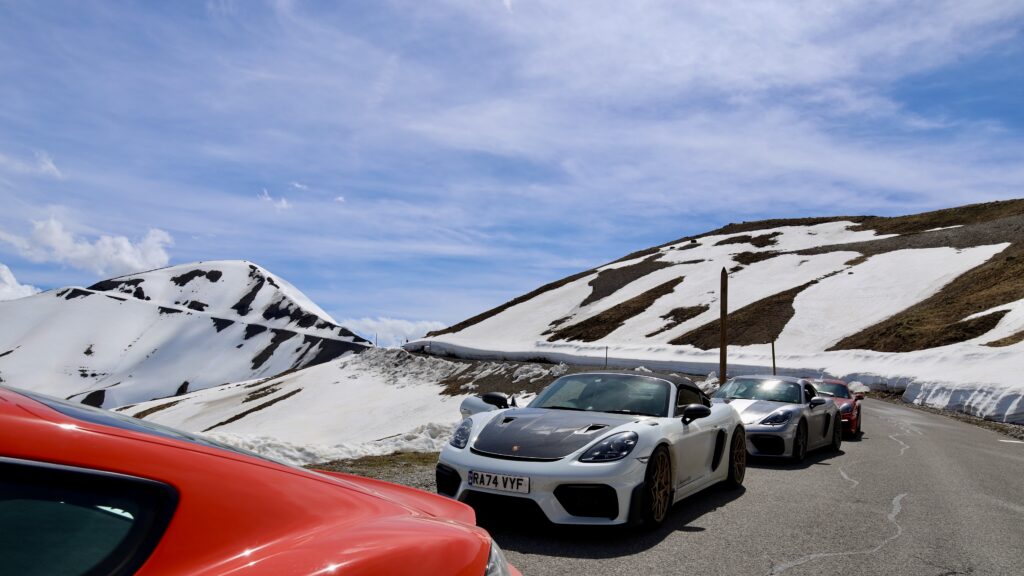

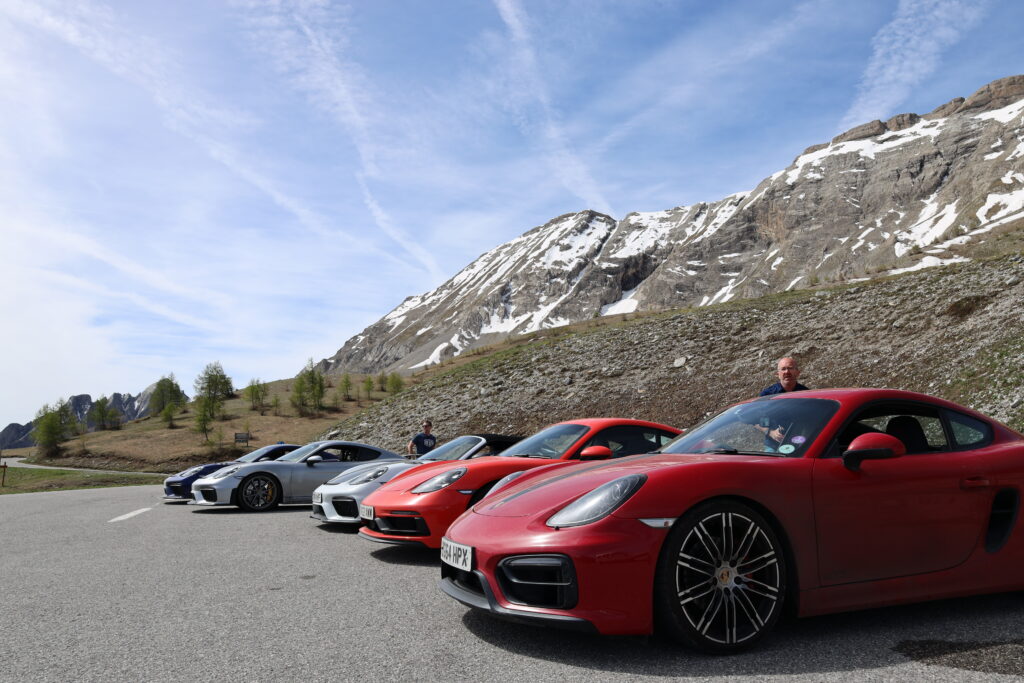
We got back and I felt like I’d accomplished something. I’d achieved what I could in a modern-day classic, shall we call it, and I was ready to refind the joy from being back in a 911. This time I was going for that range topping GTS.
A New Era For The 911
The newest 992.2 T-Hybrid GTS is an astonishing machine. It’s engineered with breathtaking precision and capable of performance that once belonged only to the track.
YouTubers have provided endless commentary about how amazing this car performs. Here’s just a few examples:
- Throttle House: “The response is instant. There’s absolutely no lag, it goes the moment you breathe on the throttle”. “This is the quickest GTS we’ve ever driven, and it feels as though the hybrid system is doing far more than Porsche suggests”.
- Shmee150: “The electric motor fills in the torque straight away, it still feels like a 911, just more urgent”. “The front end is sharper than expected. It turns in as if the car is lighter”.
- AutoTopNL: “The acceleration is savage. It just surges forward without any hesitation”. “This genuinely feels like the quickest non-Turbo 911 so far”.
- Rory Reid: “It’s smoother, quicker, and more composed. The hybrid system fills the gaps that used to be there”. “You exit a corner and it feels as though it’s already boosting”.
- Matt Watson (Carwow): “The mid-range shove is ridiculous. It feels like the turbo is already spinning flat out”. “The hybrid bits make it feel more serious and more immediate”.
- The Straight Pipes: “The turbo is already up to speed before you’ve even properly pressed the throttle”. “It feels a bit like an electric car coming out of corners, yet it still sounds like a 911”.
The consensus is unanimous. It’s the best 911 GTS ever. Or at least that’s how I read things. What’s even more imposing is how well this commentary aligns with the purposeful changes in the new GTS.
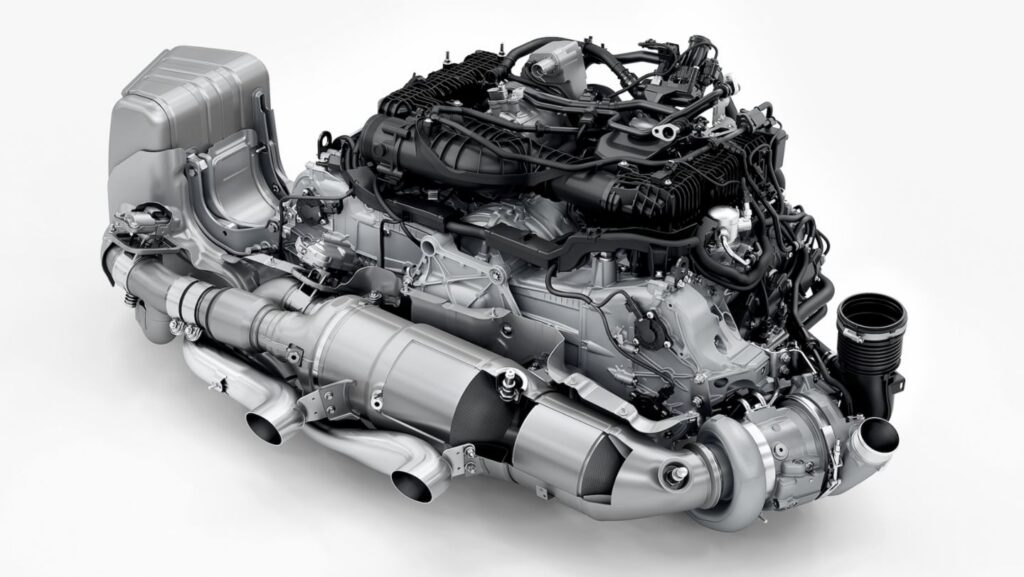
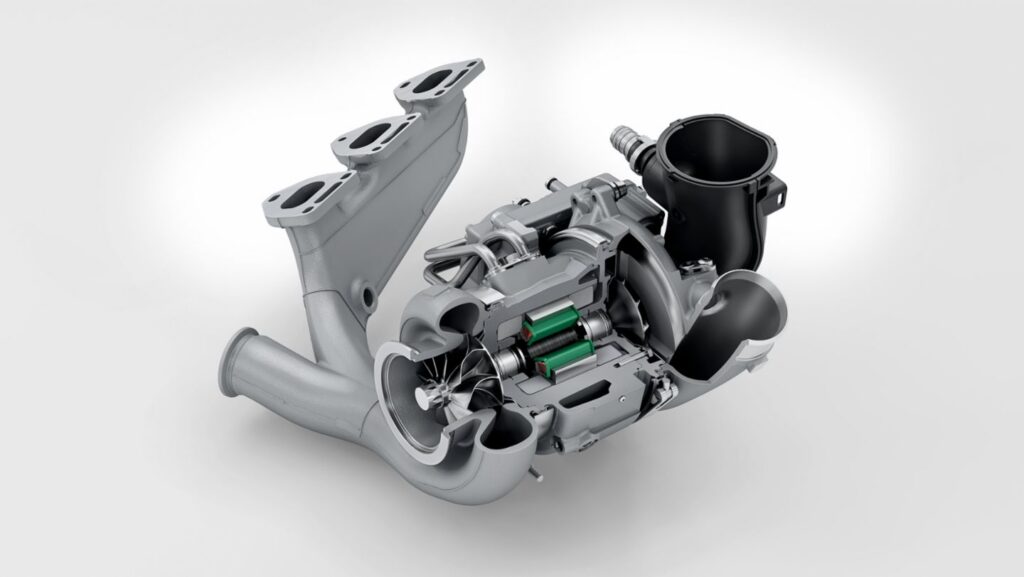
The key differences between the outgoing 992.1 GTS and the new 992.2 GTS look something like this:
- E Turbo Motor: Uses an electric motor mounted on the same shaft as the exhaust driven turbine and compressor to spin the shaft before exhaust flow can bring the turbo up to speed, and to hold the shaft at a set rpm when exhaust flow is low. The car now builds and maintains turbo speed on its own.
- PDK Integrated E Motor: Uses a permanently magnetised electric machine placed between the flywheel and the eight-speed PDK to add torque directly to the drivetrain even when the engine is not producing it, and to spin the crankshaft for engine start without a separate starter. There’s no experience of torque rising and falling strictly with engine output because the car now fills and smooths torque automatically.
- Power Battery (400 volt, approx 1.9 kWh): Uses a compact high-voltage lithium-ion pack to store and release electrical power for the e turbo motor and the PDK e motor. There’s no reliance on engine power alone because the car now delivers extra drive energy independently of engine load.
- High Voltage Inverter and Power Electronics: Uses semiconductor switching modules to convert battery power into controlled three phase current for the electric motors and to turn motor output back into stored energy during regen. The direct mechanical link between throttle input and torque response is removed because the car now electronically meters and blends torque.
- Redesigned 3.6 Flat Six Engine: Uses a larger bore and stroke and a reworked block to make space for hybrid components and to interface with the electric motors. The engine produces 5PS more and allows for a combined combustion–electric system.
- Hybrid Cooling Circuit: Uses separate electric pumps and additional heat exchangers to cool the inverter, battery, and motors independently of the main engine. The car now regulates multiple cooling loops.
How It Feels To Drive The Perfect Machine
This is a fast car. A very fast car. It’s flawless in how it picks up speed and in my four-wheel drive variant, not even the worst wet weather will deter it from feeling utterly grounded on the road.

However, given the title of this article it’s time to get to the main point.
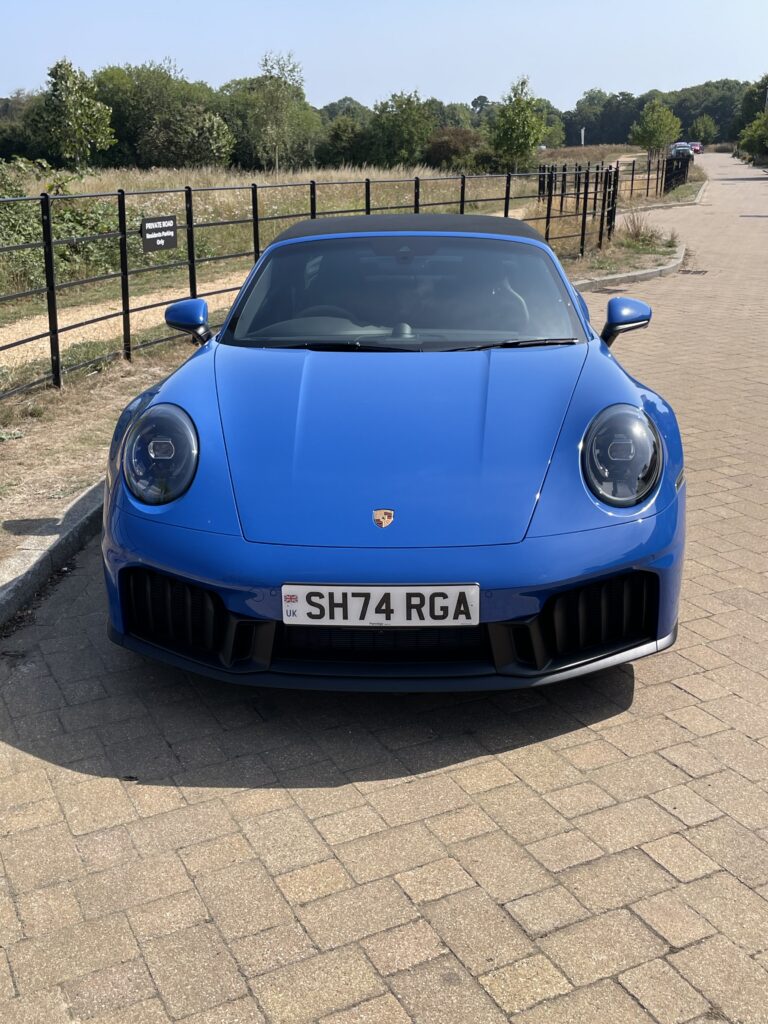

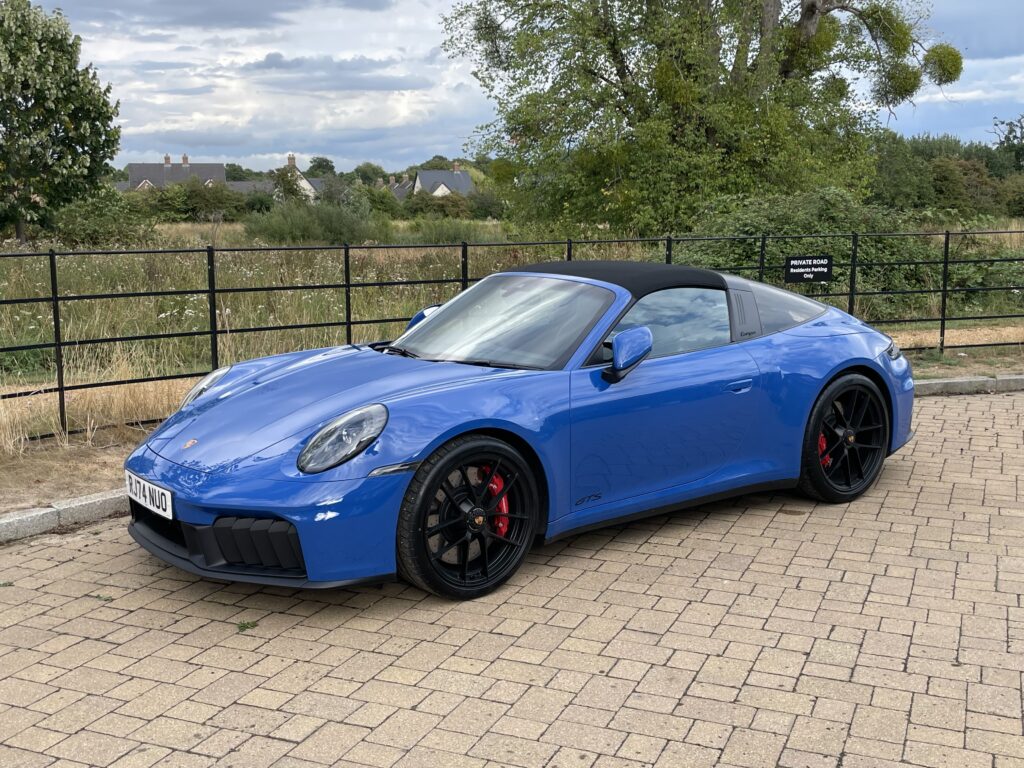
Having owned one for a while now, I’m realising in the pursuit of ironing out flaws, flaws that were perhaps never flaws to drivers, Porsche has created a machine that’s so capable the driver skill is no longer a meaningful variable in performance outcomes.
And that is the heart of the problem with the new T-Hybrid 911 GTS.
It is a fundamentally different experience to that of what we’ve come to expect from a 911. If sports car joy is derived from managing imperfection, then the more Porsche perfects, the further it moves away from the original sports car experience. Here’s how my own list would read as a regular driver:
- E Turbo Motor: Removes the satisfaction of working with boost and throttle timing, because the car preloads the turbo for you and takes away the rise, build, and anticipation that used to reward skill.
- Power Battery (400 volt, approx 1.9 kWh): Removes the connection between your effort and the car’s acceleration, because the hybrid system adds its own stored shove even when your gear choice or revs wouldn’t have produced it.
- High Voltage Inverter and Power Electronics: Removes the direct, mechanical honesty between your foot and the drivetrain, because software now decides how much torque you get instead of your right foot commanding it.
- Redesigned Hybrid 3.6 Flat Six Engine Design: Removes the old climbing torque curve and the rising engine note that went with it, because the hybridised flat torque delivery flattens the sound, the feel, and the sense of working up to a peak.
The GTS now feels almost digital, unemotional. The extra weight of the hybrid system feels heavy on the wheels. In fact the GTS is only 0.2 seconds quicker than the S, despite a 61 hp and 80 Nm torque advantage, aside from the flattened torque curve benefits, proving the weight is making the difference.
Most importantly, it feels like it doesn’t matter how I drive it. There is no latency, no variability, no uncertainty to master. Instead of the car asking a question and the driver answering it, the car answers its own questions before the driver even knows they were asked. The loop becomes:
Driver input → System interprets → System perfects → System delivers → Driver receives
Before: I found the torque and timed it perfectly.
Now: It was already there waiting for me with nothing for me to do.
The soundtrack change is the biggest disappointment. A 911 should not sound like a muscle car and that is exactly how it sounds. The hybrid assistance smooths over the natural spikes and dips that once told the driver what the engine was feeling, too.
What used to be a living, breathing conversation is now a polished broadcast. Impressive, yes. Emotional, less so.
The GTS is now complete in a way a 911 should never be. A 911 should leave room for the driver to matter. It should leave space for imperfection. It should reward skill, not replace it. For years, the GTS understood this better than anything else in the range. Now, it is the one that has moved furthest away from it.
It Seems To Be On Trend
Lewis Hamilton is one of the finest drivers of his generation. Yet in one car he dominates the world, and in another he struggles to reach the front. That shouldn’t be possible if the driver were still the defining factor. But in modern F1, the cars have become so capable, so engineered to perfection, that machinery now dictates the outcome far more than the person behind the wheel. The sport hasn’t lost talent, it has buried it beneath systems that do too much of the work. The evidence to support this is clear:
- A July 2025 research paper titled “Predicting Formula 1 Race Outcomes: Decomposing the Roles of Drivers and Constructors through Linear Modeling” finds that constructors explain 64% of the variance in race results in the hybrid era.
- A July 2023 study “Bayesian Analysis of Formula One Race Results: Disentangling Driver Skill and Constructor Advantage” finds that approximately 88% of the variance in race results is explained by the car (constructor).
- A November 2024 analysis of F1’s key trends states that “Teams are struggling to improve their cars” and emphasises that car performance is increasingly dominating results.
Porsche is now following the same trend with its iconic sports car. And yet the one thing the 911 has always been able to deliver that no other sports car has been able to copy is the feeling that the driver matters. Take that away, and the 911 becomes fast, beautiful, prestigious, but replaceable.
Where Does Porsche Go Next?
I feel there’s room to learn from those M Performance guys at BMW. The M4 provides the ability to change character dramatically at the press of an M button. One mode might be efficient and controlled. The other, perhaps, unpredictable, demanding, and alive. It allows drivers to choose the kind of challenge they want.
Now imagine a future 911 hybrid with something similar. A mode where:
- Torque fill is disabled, allowing boost to build naturally
- Throttle response has texture again
- Rev rise and fall is not flattened by electric smoothing
- Steering and chassis feedback are raw enough to require finesse
- Imperfection is restored as part of the experience
A mode that brings back the reward prediction error loop the GTS was once famous for. A mode that reminds drivers why they fell in love with this car in the first place.
Because the solution is not to reject the hybrid era. The solution is to ensure the hybrid era does not reject the driver.
If Porsche builds that car, the GTS will once again be the sweet spot. Not the fastest. Not the most extreme. But the one that remembers that the 911 is not just a machine you use. It is a machine you learn.
And that is something no other sports car has ever been able to copy.
Until then….
I’ll be trading my very capable 992.2 Targa 4 GTS for a 992.2 Carrera S. On paper, it’s the lesser car, but it preserves something the new GTS has begun to move away from: a power delivery that unfolds, evolves, and demands the driver take part in it.

Its turbocharged flat six still breathes in a way you feel through your hands and right foot. The torque doesn’t arrive as a perfect wall; it rises and swells. It rewards timing. Too early and you outrun the boost; too late and the moment is gone. Get it right, and the engine meets you with a response you helped create.
Engine load changes are still part of the dialogue. You sense when the car is leaning on the turbo when it wants a downshift to catch the power band, and when it prefers to run cleanly into higher revs. The feedback loop is still intact:
Throttle input → Boost builds → Torque rises → Chassis loads → Driver responds
It isn’t flattened, corrected, or sanitised.
And this is where the magic lives. The more attention you give it, the more it gives back. You shape the drive rather than simply request performance from a system that perfects everything for you. The experience is built from engine breathing, turbo pulse, rising torque, and shifting chassis weight. You aren’t just fast. You’re involved.
That is why, for now, the Carrera S feels closer to the car the GTS once was. It leaves room for mastery. It gives the driver responsibility. It keeps the story of the 911 alive where it has always belonged: in the space between what the car can do and what the driver can get out of it. If perfection replaces participation, the 911 becomes just another fast car. And the world already has enough of those.